CRM, then admin, then AI: making small-ticket SME lending pay
Indexed lead inflow ~5.5× from 2020 to 2025, sales headcount held flat, leads per seat index 100 → 443.

Small-ticket only works if the unit economics do.
Volume business, thin margins. The gap is not a shortage of borrowers. Origination and admin eat the economics before a facility books. This business pays on speed and cost-to-serve, not on adding sales seats.
Three steps. In that order.
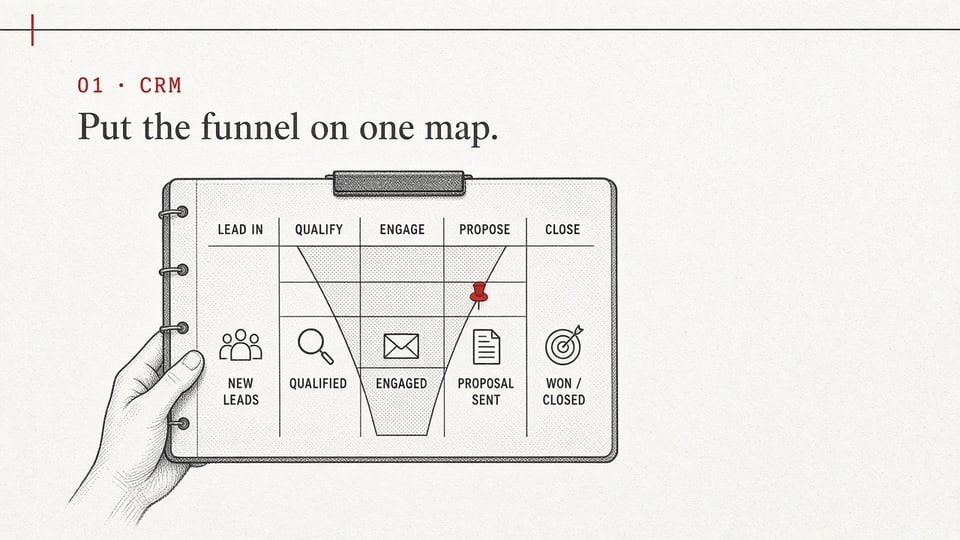
Digitize the funnel in a CRM
You can't automate what you can't see.
Named milestones, one system of record, lead sources counted the same way. Real-time management instead of a weekly export. Messaging consolidation came later: useful, not a prerequisite.
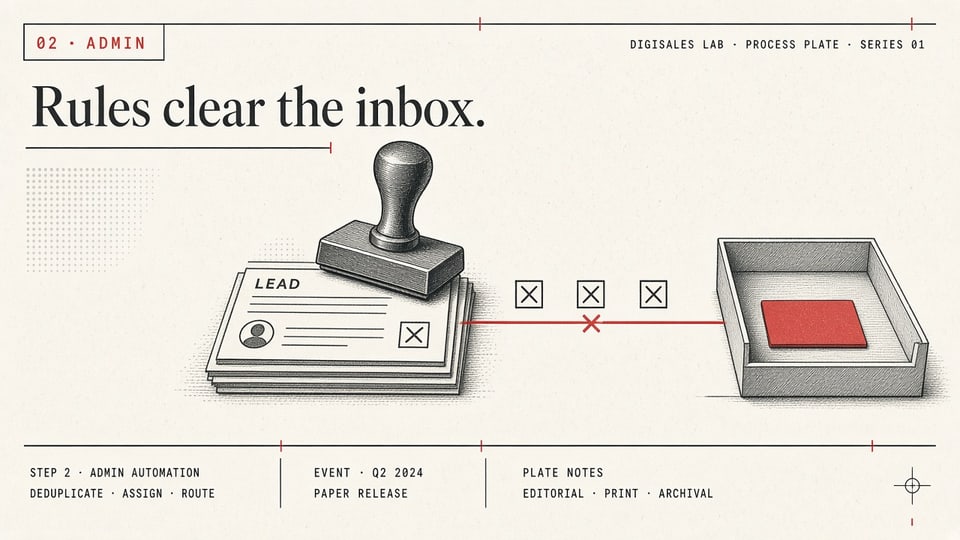
Automate the admin, not the judgment
Once the CRM was the system of record, inbox work became rules.
Dedupe and assignment went real-time. Follow-ups stopped depending on memory. Start simple; squeeze the CRM before buying another tool. Fix the rule when the exception pile says so.

Put AI in the journey after the plumbing works
AI went in after the funnel was visible and admin no longer sat in someone's head.
Sales: qualify, nurture, FAQ, documents. Outbound started a conversation. It did not dump a product sheet. Ops: OCR, eligibility screening, a proposed approval amount. Policy still owned the line.


Indexed growth. Same sales seats.
Indexed for public sharing. Absolute lead counts withheld. 2025 may be year-to-date or projected.
- Lead inflow: index 100 (2020) → 554 (2025).
- Leads per salesperson: index 100 → 443. Headcount flat since 2022.
| Year | Indexed value (2020 = 100) |
|---|---|
| 2020 | 100 |
| 2021 | 168 |
| 2022 | 243 |
| 2023 | 347 |
| 2024 | 482 |
| 2025 | 554 |
| Year | Indexed value (2020 = 100) |
|---|---|
| 2020 | 100 |
| 2021 | 135 |
| 2022 | 195 |
| 2023 | 278 |
| 2024 | 385 |
| 2025 | 443 |
What I would run again.
Start with one flow
CRM. Then assignment. Then documents. Each had to work on a Tuesday before the next one was worth building.
Compete on speed and cost-to-serve
Sales headcount stayed flat from 2022. Indexed leads per salesperson rose because the queue, the follow-up, and the pack stopped being a headcount problem.
Got one flow that still lives in a spreadsheet?
Discovery is how we decide whether the next step is CRM, admin, or AI.